Monday, November 16, 2015

Top Gun: A Very Light Drama

We are welcomed by a whole new decade this time: the unforgettable, marvelous, and sometimes-very-cheesy 1980's! Today, let's take a look at Tom Cruise's first major movie hit: Top Gun (1986, PG). The movie earned a generous $176.7 million in domestic total gross, with a production budget of only about $15 million. While we are introduced to a different time in filming, we also see an odd, continued pattern: airplanes! That's right folks, once again, I randomly selected a movie about pilots. Of course, it is not the subject of planes that make movies worth watching, rather the plot, the characters, and the effects. We are also reintroduced to the hybrid genre of action drama. To be honest, I'm growing tired of these "plane actions", but the rules are the rules, and I must approach Top Gun with an unbiased, clear mind.  

 
http://www.nischwitzgroup.com/wp-content/uploads/2015/05/Top-Gun.jpg

Lieutenant Pete "Maverick" Mitchell (Tom Cruise) and his best friend, Lieutenant Nick 'Goose' Bradshaw (Anthony Edwards) are sent to one of the most elite pilot academies in the world, the Navy Fighter Weapons School (or as the soldiers like to call it, Top Gun). There Maverick meets his antagonist and fellow wingman, Lieutenant Tom "Iceman" Kazansky (Van Kilmer) who constantly criticizes Maverick for flying recklessly.


https://www.youtube.com/watch?v=z_BEJmY911s

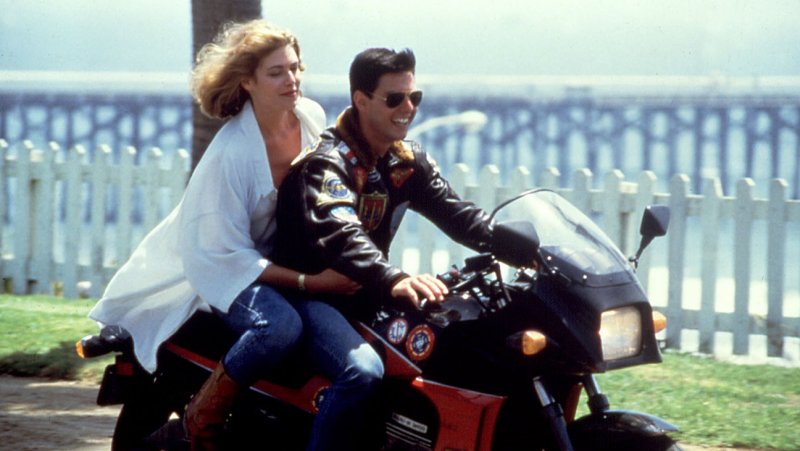
We also see Maverick meet his love interest, the beautiful Charlie Blackwood (Kelly McGillis) who is also an astrophysicist and instructor at Top Gun. After experiencing a series of challenges both in the air and on the ground, Maverick loses motivation to continue at the academy. Eventually, Maverick regains his confidence and decides to rejoin the school to complete the final and most important flight mission yet.


https://www.warhistoryonline.com/wp-content/uploads/2015/07/558f1cb98a9e4.jpg

The movie already feels dated within the first few moments of watching it. The entire score consists of crappy 80's hair metal rather than a legitimate orchestral arrangement. The beginning has it's shining moments however, as we are immersed into the exciting world of Navy flying. We first see the cool, eerie environment of the runway, in which the camera is temporarily tinted with a brownish filter. Along with the visuals, we hear some impressive take-off sound effects. For a movie made in the 80's, those jet engines sound like they are right next to my ear. The film then introduces us to Maverick in a thrilling and energetic flight scene. Nonetheless, what comes next is mediocre and sometimes just embarrassing to watch.
 

http://www.war-movies.info/warmovies/top-gun-4.jpg

Top Gun is by no means timeless, and I wouldn't be surprised if the movie's relevance will (if it hasn't already) completely fade away within the next couple of decades. One major problem with the film is that it is just too...80's. There is a bar scene which contains enough ridiculous hairstyles, neon clothing, and shoulder pads to last me a lifetime. I can only imagine what that bar probably smelled like: cigarettes and about a thousand gallons of aqua-net hairspray. And let me just say, Meg Ryan's hair looks terrifying:


https://meatgrinder.co/photos/meg-ryan/top-gun-c8113305c0428b74ed3f1b6051520039-large-37094.jpg

Even the soundtrack of the movie screams 80's from the rooftops, including the recurring song, "Take My Breath Away" by Berlin. There are even a couple of sing-along scenes. That's right. An action drama about Navy pilots actually has a scene where Maverick sings "You've Lost That Lovin' Feelin'" by the Righteous Brothers with a chorus of fellow Navy pilots.


https://www.youtube.com/watch?v=PLzVbz2HHzo

A movie having a quote-unquote "80's feel" isn't necessarily always a bad thing, as we've seen with highly praised movies like Back to the Future. If Marty's red vest jacket or Doc's DeLorean time machine aren't the definition of the 80's, I don't know what is. The main issue with Top Gun is the lack of creativity, substance, and surprise in the plot. The romance between Maverick and Charlie is obviously a constructed, made-to-entertain relationship.

Tania Modleski, an English professor at the University of Southern California claimed that the film embraces misogyny. She believes Top Gun is guilty of "equating women with the enemy to be conquered, and silencing female voices that have attempted to speak authoritatively about the war."


http://cdn.inquisitr.com/wp-content/uploads/2013/12/Kelly-McGillis.jpg

I have to agree with Ms. Modleski in the fact that there seems to be a connection between war victory and "winning over the girl". At the very end of the movie after Maverick completes his final air mission, he is rewarded with another steamy, flirtatious encounter with Charlie. It almost seems like Charlie is Maverick's trophy.

Another flaw with the love story is just how unconvincing it really is. For a movie that according to IMDb claims to be an action drama, the romance is quite unsatisfying. Charlie falls for Maverick almost instantly, even though Maverick makes awkward, uncomfortably quick advances towards her. Modleski writes, "Before he (Maverick) knew Charlie as a teacher, he sees her in a bar and tries to make a sexual conquest of her practically on the spot." Even on their first date, Maverick arrives at Charlie's house and asks if he can use her shower. If this were a real-life scenario, I'd hope Charlie would be at least a little taken aback by Maverick's aggressiveness.


https://www.youtube.com/watch?v=oFDGITpL0cc

A major reason as to why I enjoy dramas so much is because they seem to capture more realistic situations than the big Hollywood comedies, horrors, or action films. That's another thing: for an action drama, this movie is definitely more action and romance than it is drama. That's not to say that there aren't some genuinely well-done drama scenes every now and again.

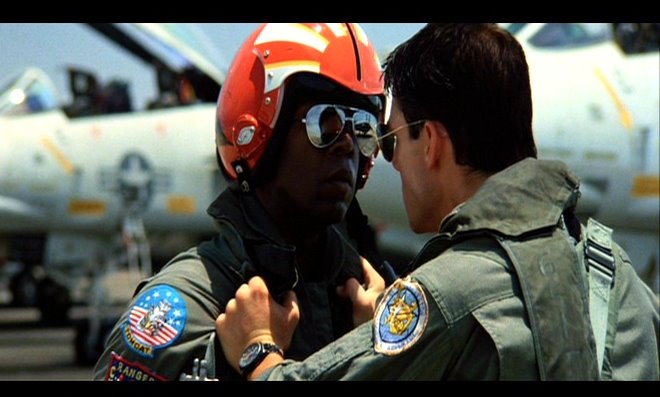
Around the midpoint of act II, the flick takes it's dramatic turn, and it's about damn time. There will be no spoilers ahead, so I'll just say that something major happens in the story, discouraging Maverick from continuing to fly. Maverick's emotional process is very relatable to real life, and I really feel sympathetic towards him. Maverick first goes through anger after one of his fellow wingmen yells at Maverick for not firing his weapon. He pulls the wingman by his collar and  responds, "I will fire when I am goddamn good and ready!"


http://www.topgunday.com/wp-content/gallery/top-gun/sundown-you-coulda-had-him.jpg

Maverick then experiences sadness, as he cries and embraces a character named Carole (Meg Ryan). Finally, Maverick is reenergized and ready to continue pursuing his life goals by rejoining the academy.

Another aspect of the movie worth mentioning is not necessarily a criticism of Top Gun, but more of an interesting observation. The film is rated PG, but I have a difficult time believing that the movie would pass for children younger than 13 nowadays. The characters can be quite mouthy, using a colorful array of profanity such as "dickhead", "bullshit", "asshole", and the list goes on. There's also a sex scene that lasts about a minute. The PG rating sparks some curiosity as to whether the Motion Picture Association of America (MPAA) had become temporarily more lenient on ratings in the 80's and 90's than in other time periods. An interesting documentary, This Film Is Not Yet Rated explores the decisions made by the MPAA. For your viewing pleasure, here is part of that documentary:


https://www.youtube.com/watch?v=gIncrMYRUJ0

Top Gun will forever exist strictly in 1986. Apparently Top Gun 2 is currently in development. The big question I have is, "Why make a sequel now? After all, it's been almost 30 years since the first movie was released." The answer that my brain keeps coming back to is "Money."

WARNING: THIS VIDEO CONTAINS A SPOILER
 

https://www.youtube.com/watch?v=QhIVGshLBIo

While it's debatable on whether Top Gun should be considered a quality drama, it's certainly a significant film as it set off Tom Cruise's distinguished career as an A-list actor. As I previously mentioned, I think Top Gun's relevancy is weakening, so the second movie could have the potential of being a flop. Then again, Cruise is now well-known for his lead roles in well-liked productions such as Mission Impossible, Edge of Tomorrow, and Jerry Maguire. So maybe Top Gun 2  does have potential to be something better. But I'm not going to see it.


Monday, November 2, 2015

Air Force One: The Slightly Unpredictable Blockbuster

Strangely enough, after randomly picking my decade for this week, I landed on the 1990s once again. And what do you know? Another movie about planes! Well, there's a little more to the story than just that. Air Force One (1997. R), directed by Wolfgang Peterson (Troy, Outbreak) earned $172.9 million in the box office for domestic total gross. Harrison Ford, who stars as the lead character in the film, could be one of the main reasons as to why the movie was so successful.


http://www.etonline.com/photo/2014/07/24091668/640_harrison_ford_roles.jpg

After all, Ford has become used to the Hollywood spotlight earning big-time roles in celebrated movies like Star Wars, Blade Runner, The Fugitive, and of course, playing the revered archeologist himself in Indiana Jones. Air Force One was a major go-to movie in the summer of 1997, but has it held up over time? Let's find out.

The film begins with United States President James Marshall (Harrison Ford) making a speech in Moscow. He promises that the U.S. will never again, under any circumstances, negotiate with terrorists.


http://impdb.org/images/thumb/f/f7/AF1VC-25A.jpg/500px-AF1VC-25A.jpg

President Marshall later boards Air Force One with his wife, Grace (Wendy Crewson) and daughter Alice (Liesel Pritzker Simmons). Shortly after takeoff, a group of Russian terrorists hijack the plane. The terrorists want Russian terrorist leader, General Ivan Radek (Jürgen Prochnow) to be released from prison. Meanwhile, U.S. Vice President Kathryn Bennett (Glenn Close) is in the White House trying to compromise with the terrorists while also struggling to ensure the safety and well-being of the plane's passengers. Because of the importance of the plot in this movie analysis, spoilers will be ahead.


https://nxnwboise.files.wordpress.com/2015/04/afo-mp5a3-4.jpg?w=1024&h=427

Air Force One's beginning credits are exciting, with composer Jerry Goldsmith conducting a patriotic and grandiose score that fits the movie's subject very well. Along with the music, the many scenes filled with gunfire and explosions add to the glossy Hollywood quality of the film. Nonetheless, there are scenes here and there that seem completely outdated and rather ugly compared to today's standards. For example, there is a scene in which some of the passengers manage to escape the aircraft by deploying parachutes. The way the passengers fall into the sky with their parachutes looks unnatural and computerized. There is also a scene in which the plane looks more like the product of a video game than an actual object I can touch.


http://cdn.playbuzz.com/cdn/56e2f2cf-6f29-489f-9291-b2ece6d84dba/8ddeb259-bf3a-4d77-8de5-1472fd3935f5.jpg

Also, for a movie made in the late nineties, the sound quality is kind of mediocre. Sure, I wasn't listening to the film in a theatre, but usually my around ear headphones pick up digital sound very well. Compared to Pearl Harbor, a movie that was made only four years after this film, Air Force One didn't bother taking advantage of digital surround sound. For a movie containing so much action and violence, it wasted a great deal of it's sound potential. In terms of camera style, the film isn't that edgy. Although there is a cool scene when the members of the White House are celebrating over the defeat of the terrorists on Air Force One. The camera spins around the room of the White House, almost uncontrollably.

President Marshall is probably the most likable politician that will ever be known to man, making him pretty unrealistic.


http://www.snakkle.com/wp-content/uploads/2012/07/harrison-ford-air-force-one-1997-movie-photo-GC.jpg

Professor at the State University of New York in Buffalo, Ram Samudrala writes his thoughts in an article conveniently titled, "Air Force One". He mentions, "we're asked to believe that the President of the United States can, in a situation of conflict, fight like Han Solo from Star Wars." Scenes when President Marshall walks around with a machine gun, and when First Lady Grace Marshall constantly talks back to the terrorists make the movie seem more artificial. 

Harrison plays sort of a "rebel president" in the sense that he doesn't bother consulting anyone in the government before he makes his speech on refusing to negotiate with terrorists.


https://www.youtube.com/watch?v=WwQ-TCeM2mU

He seems like the kind of president you can have a beer with. In one scene the President even asks one of his assistants, "Could you get me a Heineken?" There's no doubt that this is obvious product placement, but this dialogue actually helps us better understand exactly what kind of guy President Marshall really is: the everyday kind of guy. The movie adds a little bit of plain-folks appeal.

While the movie follows some of Hollywood's classic and predictable rules, it also succeeds at breaking some. Marshall's deputy press secretary, Melanie Mitchel (Donna Bullock) is ruthlessly murdered by the terrorists after they count down from ten.


https://www.youtube.com/watch?v=XTndK3-iHvA

I would have thought she would have been saved at the last second, but surprisingly, she is shot and killed immediately. Also, there is a twist at the end when we find out that Secret Service Agent Gibbs has actually been working with the terrorists on the plane the entire time.

First Lady Grace Marshall begins to feel more and more like a quivering damsel in distress as the movie progresses. We are welcomed, however, with a refreshing surprise. In the final fight scene between President Marshall and terrorist Ivan Korshunov (Gary Oldman), Grace helps her husband defeat the enemy.


https://www.youtube.com/watch?v=YdaeVone5qA

Grace strikes Ivan, giving President Marshall enough time to make a quick move, and hang the terrorist with a parachute. The movie does a decent job at throwing in some unexpected jabs throughout the running time.

Air Force One is not that groundbreaking, but it has enough unpredictability to keep the audience interested throughout the film. You pretty much know from the start that President Marshall is going to be fine, and so is his wife and daughter. You know that the Russian terrorists are going to lose and that the U.S. government will celebrate over their victory. But we still watch the movie anyway for the little moments that give us that tiny jolt of anxiety.

Sunday, October 25, 2015

The Sixth Sense: A Fusion of Fright and Thought

Isn't it strange how I wind up discussing The Sixth Sense (1999. PG-13) only a few days before Halloween? As usual, I randomly selected a decade and a top grossing drama, and it just so happened to land on this film. The movie is directed and written by a man who many critics label as infamous, M. Night Shyamalan. In current years, he's been the mastermind behind many flops such as Lady in the Water (24% rotten tomatoes), The Last Airbender (11%), and After Earth (11%). It's not so much the sales of his movies, but the unsatisfied audience that creates buzz. The man who was once perceived as a unique, "new-kind-of-artist", is now often criticized for his overuse of plot twists, inability to create raw or captivating dialogue, and the list goes on. Nonetheless, when The Sixth Sense was released, Shyamalan was still the new, fresh-faced guy that everyone seemed to like in Hollywood. So let's explore a film created pre-Shyamalan downfall.


http://media1.break.com/breakstudios/2011/11/8/The-Sixth-Sense-1-1.jpg

Earning an impressive domestic total gross of about 293.5 million dollars, The Sixth Sense became the summer smash hit of 1999. The film centers around Malcolm Crowe (Bruce Willis), a child psychiatrist from Philadelphia who meets a troubled little boy named Cole (Haley Joel Osment). Cole is able to communicate with the dead. Scared and confused, Cole wants the sprits to go away. Malcolm advises Cole that if he faces the ghosts and tries to help them, they will eventually disappear. The running plot leads to a surprising ending that I will not reveal. This is a spoil free blog!

The Sixth Sense is interesting in the fact that the movie is a blend of different genres. Sure, it can be argued that basically every movie is a mixture, but The Sixth Sense is more noticeable. While it can be considered a drama, it also has many elements of a thriller, or even a horror film. Other than the blending of genres, the movie has multiple purposes. What is the movie trying to say? While experiencing the entertaining suspense, we also learn about how people cope with death. When the ghosts first appear on the screen, they are frightening and graphic-looking.


http://wheresthejump.com/wp-content/uploads/2015/06/sixth-sense-3.jpg

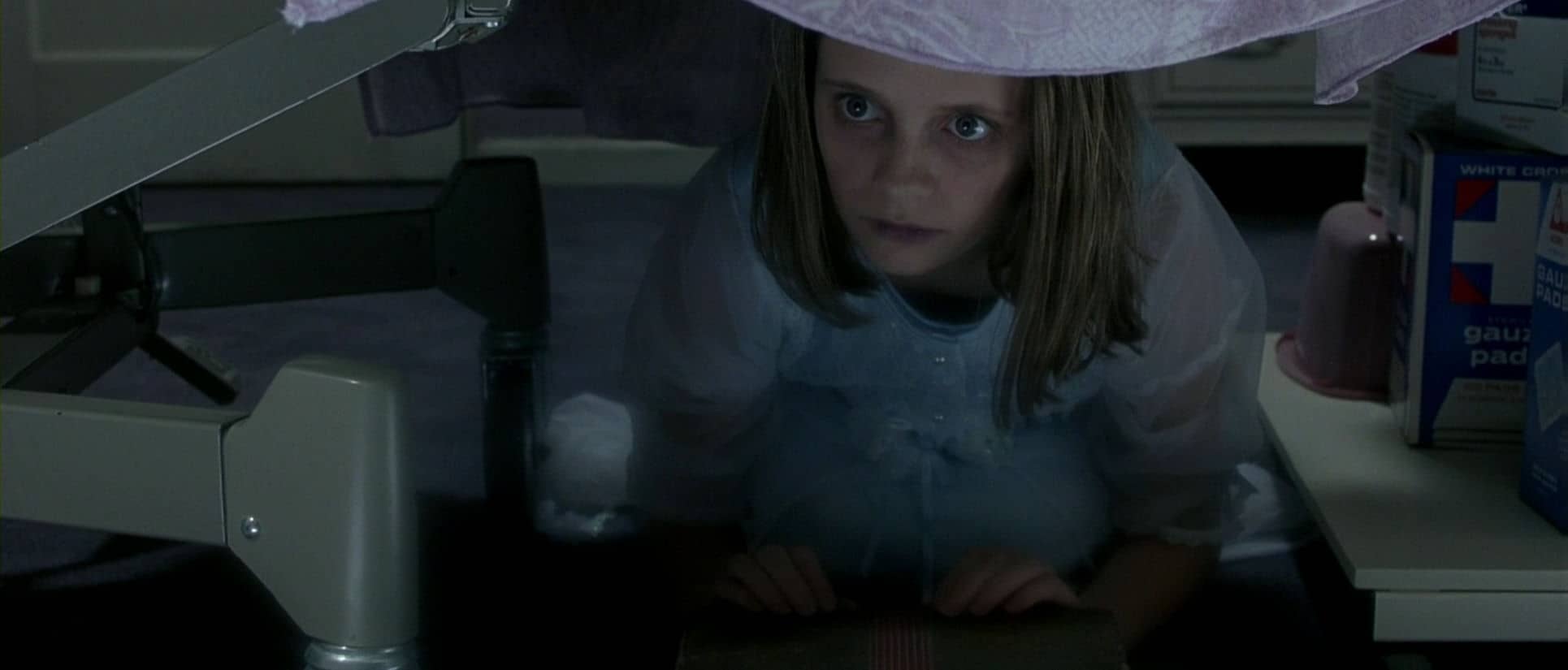
As we learn more about their intentions, however, we realize that there is no reason for Cole to be scared of these people. Philosophy professor Marguerite La Caze from the University of Queensland wrote a thought-provoking article on the movie titled, The Mourning of Loss in The Sixth Sense. She writes, "The ghosts of The Sixth Sense are victims of domestic violence, execution, and, in one case, Munchausen's syndrome by proxy. Others committed suicide or died by accident." In one scene, Cole encounters the ghost of a little girl foaming at the mouth. We later find out that her name is Kyra (Mischa Barton), and her mother killed her. Kyra wants Cole to show her father a video of her being poisoned by her mother, so he knows what really happened. The paranormal are startling at first, but we soon understand that they have feelings just like those who are living.


https://www.youtube.com/watch?v=JqW9iC0DAHM

The movie asks a simple yet somehow complex question: Why are we so afraid of the deceased? Why do we find them creepy? The film is bold and refreshing in the sense that it challenges us. It questions our common fear of the dead. La Caze mentions, "The psychological realism of The Sixth Sense makes it likely that we feel sorry for the dead people, and the overall effect is poignant rather than horrifying or terrifying." Rather than following the typical "they-are-evil-spirits" route, The Sixth Sense goes in the opposite direction. I guess you could say the film kind of laughs at us when we jump or feel scared. The movie already knows that the ghosts are not dangerous, and waits for us to catch up.

To aid the suspense element of Sense, a single shaky camera is often used. This effect gives the movie an uneasy, on-edge feeling. Also, the film feels more real, and less glamorized. After all, the last thing this movie aspires to be is glamorous. I also appreciate the dialogue Shyamalan writes. Can we really forget the famous line, "I see dead people"?


https://moviewriternyu.files.wordpress.com/2014/02/sixth-ghost.jpg

Besides that, the conversations between Malcolm and Cole sound like genuine man-to-boy talks. Malcolm asks Cole, "Wanna play a game? It's a mind-reading game." After Malcolm explains the rules of the game, he asks, "Wanna play?" The informal tone of the dialogue sounds very close to how an adult in real-life would talk to a child. Also, the conversation in the car between Cole and his mother, Lynn (Toni Collette) is a beautifully done scene. We see the sentimental relationship between Lynn and her deceased mother.


https://www.youtube.com/watch?v=3qqVQcZxpqA

One scene that mildly annoys me is the scene with the woman in the kitchen who has cuts running down her arms. The way she violently shakes her arms seems more like a melodramatic theatrical performance than a frightening image. Overall, however, the movie doesn't really have any cheesy parts. Another weakness is a lack of elaboration. Even though we get a few, very brief glimpses into the past lives of the ghosts, it is still not very satisfying. In fact, many of the ghosts are only in the movie for a few seconds, like the boy with the gash in the back of his head, or the woman who got into a bicycle accident. The only ghost we sort of get to know is Kyra.


http://images.myreviewer.co.uk/fullsize/0000222764.jpg

The twist at the end reinforces the audience that their time has been well spent. It also provides a story that is definitely not the run-of-the-mill, predictable, scary ghost tale that you hear around the campfire. Sense provides a little bit of scary fun with a remarkably deep message. It is a popcorn flick that will also make you think.

Sunday, October 18, 2015

Forrest Gump: A Tribute to American Culture and Ordinary People

With a lavish production budget of 55 million dollars, Forrest Gump (1994) still managed to earn itself almost six times as much in the box office. The domestic total gross of the film came to a whopping 330 million dollars. Granted, director Robert Zemeckis is no slouch. He also directed big box office winners like Back to the Future, Castaway, The Polar Express and even the recently released film, The Walk. Forrest, however, is a special kind of movie by Zemeckis. While it received much praise from the Academy, the film has been also been highly criticized, and some find it to be overrated.
 

http://www.splendidhabitat.com/wp-content/uploads/2014/06/Forrest-Gump-on-park-bench-in-Chippewa-Square.jpg

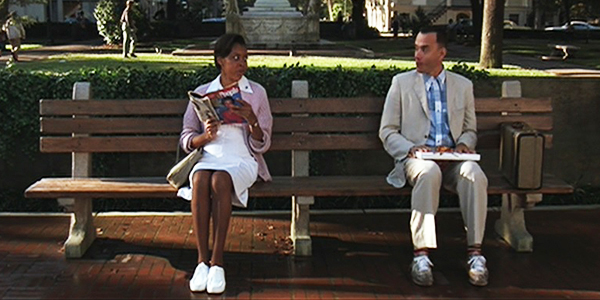
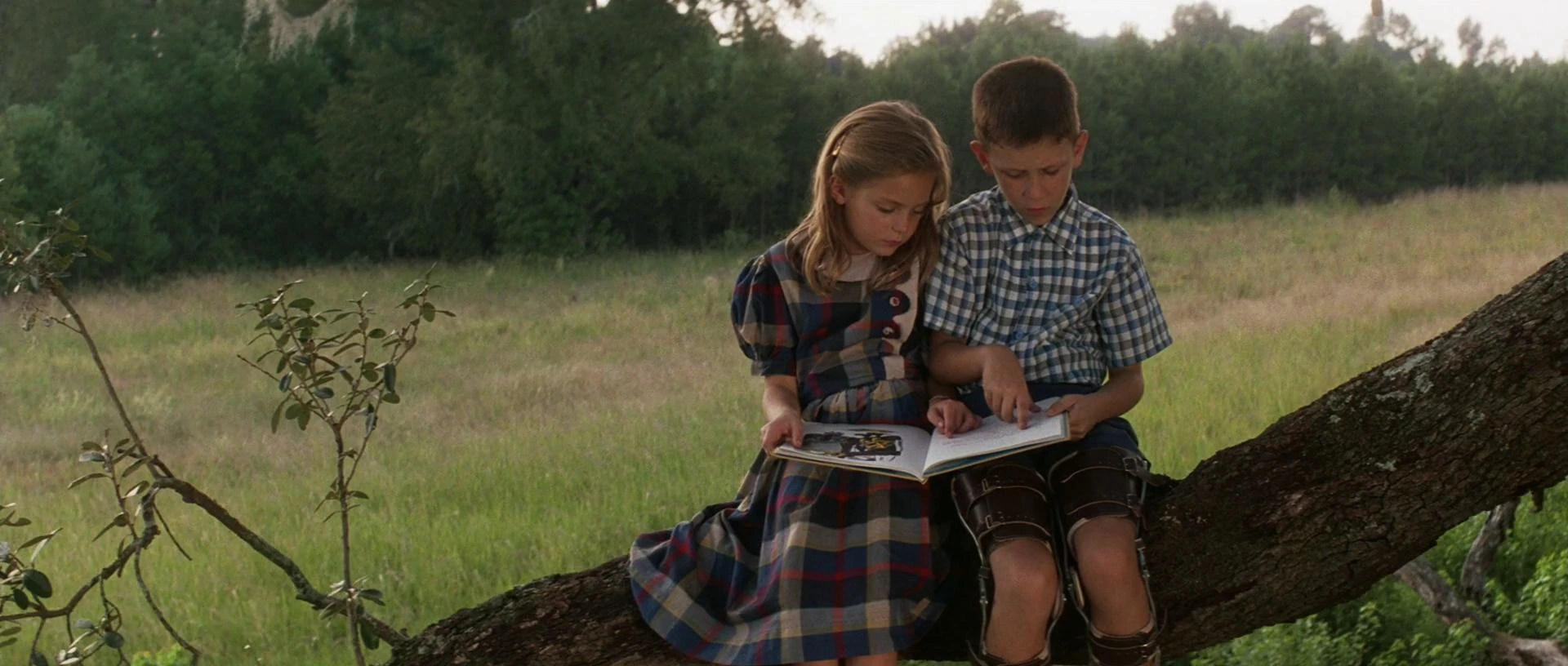
The movie centers around the life of none other than the dim-witted Forrest Gump (Tom Hanks). Boy, this is a difficult story to briefly summarize because so much happens. I'll do my best anyway. Forrest narrates the different historical events he's gone through from his childhood in the fifties, to his current adulthood in the nineties. In between all of this, we watch the reappearing and disappearing romance between Forrest, and his longtime friend, Jenny (Robin Wright).
 

http://vignette4.wikia.nocookie.net/f__/images/f/f2/Kids.jpg/revision/latest?cb=20140127234702&path-prefix=forrestgump

As Forrest experiences new stages of his life, the people around him and the attitude of society also change, adding the historical aspect.  Forrest is a long movie with a running time of approximately 2 hours and 20 minutes. Zemeckis and the writers definitely take advantage of this time, packing in many elements I want to talk about. I think part of the reason this movie was so successful is because there is so much an audience member can discuss after watching it. Let's first explore the underlying message of Forrest.

I know people personally who can't stand this movie, including my mom. One of the first things people will tell me when I ask them why they disliked it is, "I just didn't get it. I didn't understand why I was supposed to like Forrest, or what was so special about him. I just didn't understand." Forrest is definitely not the typical superhero, or brave fighter. In fact, he's mostly unintelligent, and does not understand a lot of things most people quickly comprehend in terms of sex, history, and sarcasm.
 

http://cdn2-b.examiner.com/sites/default/files/styles/image_content_width/hash/37/a9/37a97bb1dfaad56cf0c4e37ceaa29410.png?itok=D2SXgj-K

An article was written explaining how both the movie and book, Forrest Gump relates to postmodernism, even though I'm not going to get into that (because if I did, this blog entry would be a novel). Nevertheless, the article makes an interesting argument mentioning, "Forrest Gump is being widely read and appreciated-even celebrated-as a parable about the innate worth of the 'common man.'" Perhaps this is also why so many people have watched and re-watched the film. The movie celebrates the "common man", the "average Joe", the kind of person you probably are.

As the movie proceeds, we see Forrest transform into a very successful person. He plays for the All-American Football Team, meets two presidents, survives the Vietnam War, becomes a millionaire, and so on. What's funny, is Forrest just happens to stumble upon these successes.
 

http://d3imyo1kk0rcam.cloudfront.net/wp-content/uploads/2014/04/1b137d8c8cfe6e71cd85b044753ce6bb.png

Forrest's unexpected achievements fit in perfectly with the movie's famous motto, "Life is like a box of chocolates. You never know what you're gonna get." While the story is obviously fictional, Forrest's life sends a message. His life is a key example that anything is possible. And I got to tell you, people can make fun of Forrest all day long, but that is message we all need to hear sometimes.

A common criticism that the flick receives is that the story does not take history seriously, and in fact, exploits it. It's definitely true that because Forrest is portrayed as empty-headed, he tends to recall important facts like they are nothing. He matter-of-factly mentions the fatal shooting of John F. Kennedy, and the very significant life of civil rights activist, Dr. Martin Luther King Jr. I understand how many people, especially those who have actually lived through these events, would find this kind of storytelling offensive. The controversy over how history was used for the movie probably also contributed to the stunning popularity of Forrest.
 

http://media.theiapolis.com/d4/hMW/i1OF2/k4/l1OTH/w1HB/forrest-gump-with-president-john-f-kennedy.jpg

Nonetheless, the way that history is presented in Forrest Gump is something that is praised by others, including myself to an extent. The article later reads, "Tom Hanks did not meet and receive a commendation from JFK; neither did he 'moon' Johnson; neither did he bring down Nixon by discovering the Watergate break-in. History becomes personal in this film." And so it does. If you can look at Forrest as something that's completely fictional, which it is, you may notice a very charming and clever way the film incorporated these historical events. The movie isn't trying to retell history, but is trying to show you how one ordinary guy recalled those events. This creates the sentimental element of the movie that so many, Americans in particular, enjoy about Forrest.

As a movie released in 1994, special effects were better than they had ever been in American cinema, and would only improve with time. After all, the much adored Jurassic Park had been released just a year prior to Forrest.
 

http://i0.wp.com/www.doblu.com/wp-content/uploads/2009/11/forrestgump5518.jpg

The movie shows off the premium talent of special effects technicians, including a scene where Forrest runs through a Vietnam jungle, carrying his best friend Bubba (Mykelti Williamson) in his arms. A series of explosions fire directly behind them as they continue through the jungle. It is a marvelous and horrifying piece of visual effects. The famous feather scenes at the beginning and end of the movie also show how much blood, sweat, and tears went into the movie's appearance. Another bit of the article describes, "the opening sequence...in which a feather wafts out of the sky to land at Gump's feet, is a remarkable piece of work. It appears to be one long, unbroken pan shot." It wasn't until I read the article that I found out the feather scene had to be completed in several, tiny shots to create one smooth scene.

At the end of the day, Forrest is often misunderstood, but there is a lot to admire. With so many different aspects to look at, and so many events and characters Forrest comes to know, I would dare you to criticize the movie for rushing.
 

http://files.umwblogs.org/blogs.dir/4336/files/2010/09/Feather2.png

You can tell Zemeckis, and everyone involved in the movie really wanted to invite you into someone's life. With the use of video and effects, we are able to experience someone else's experiences in a way that we just never could in real life. And for that, I don't think the movie is overrated. I think it's an intriguing look into the life of a guy that you'll either love or hate, and it's okay for you to feel either way about him.


Monday, October 12, 2015

Pearl Harbor: The Box Office Sensation with Shaky Elements

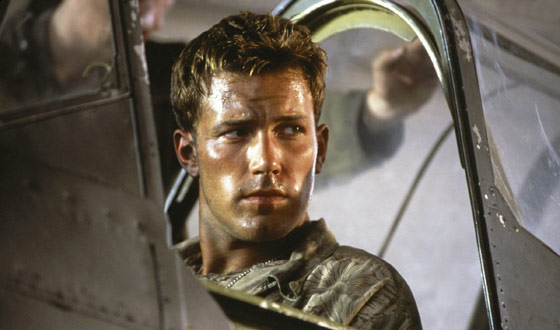
After randomly selecting another decade drama, I landed on Pearl Harbor, the 3 hour box office success with a very lackluster taste in many critics' mouths. I couldn't watch Pearl Harbor listening to the critics advice, however, and I instead needed to actively look at the film from a media literate lens. After watching the movie, I could see how some people say, "yeah, this sucks". Although I also found very well done elements of Pearl Harbor, the kind that deserve more respect than people give it.
 

http://images.amcnetworks.com/blogs.amctv.com/wp-content/uploads/2010/08/affleck-pearl-harbor-560.jpg

Considering the movie was directed by Michael Bay (Transformers, Armageddon), I was pleasantly surprised when the first scene opened with a couple of little boys flying an airplane. The little boys are later depicted as the main characters, Rafe (Ben Affleck) and Danny (Josh Hartnett). It was a calming and unexpected way to begin a movie about Pearl Harbor, but that is just the thing. This movie seemed to be not so much about replaying the events of Pearl Harbor, but rather creating the typical romance/action story with some history sprinkled on top.
Rafe is a military pilot who falls in love with a Navy nurse named Evelyn (Kate Beckinsale).


http://media.tumblr.com/tumblr_lkp4g04qGn1qhqg0d.jpg

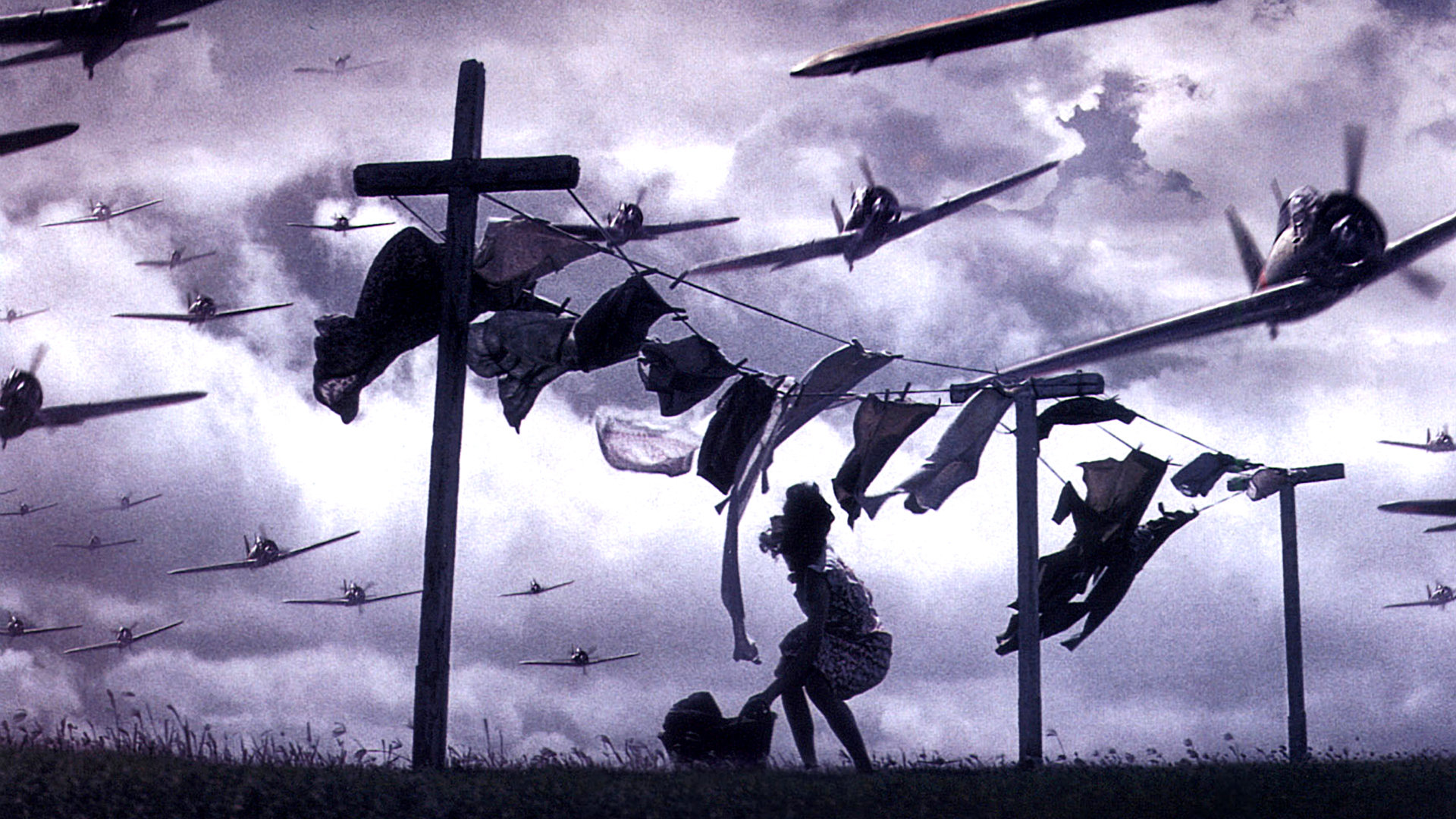
Rafe then volunteers to help the English forces in the war. Rafe's plane is shot down, and everyone close to him assumes that he is dead. Rafe eventually makes his way back to Hawaii where is reunites with his friends, but discovers that Evelyn and his best friend, Danny are in love. The attack on Pearl Harbor then occurs, and Rafe and Danny manage to kill a handful Japanese kamikaze pilots. After having a major dispute, Rafe decides that Evelyn belongs with Danny, and the two men stick together by attacking the Japanese after Pearl Harbor. Both of their planes are shot down, and Danny dies while Rafe survives. In the end, Rafe is once again in a relationship with Evelyn, and they have a son named after Danny.

The film can be very melodramatic at times, filled with kissing close-ups, slow motion effects, revolving shots, whimsical music, and voice overs. In this aspect, the movie feels dated, and perhaps too refined. Many of the refinements of the movie, however, make for very entertaining scenes. The movie builds the suspense of the attack on Pearl Harbor very smoothly, taking full advantage of the Hans Zimmer soundtrack, and even showing a montage of the Japanese planning their mission.
 

http://www.fareastfilms.com/cmsAdmin/uploads/admiral1.jpg

For the first half of the movie, the scenes go back and forth between the American love triangle of Rafe, Evelyn and Danny, and the Japanese preparing to attack.

Something I also didn't expect to find was a bit of humor. Rafe is often very clumsy around Evelyn, which helps to balance the lovesick, mushy dialogue said between Rafe and Evelyn. When Danny and Evelyn fall in love, there is an elaborate beach scene where the two frolic in the water, and I swear to god, you can hear an opera singer in the background. It was moments like these that felt very unfitting and uncomfortable. What kinds of messages should a movie called, Pearl Harbor try to convey? Well, an emphasis on romance is not the first idea that comes to mind.

Needless to say, the charm of the characters provided a little relief from the lack of character development. The main characters were very likable, and of course, the visual effects were top notch.


http://curiosando708090.altervista.org/wp-content/uploads/2012/01/pearl_harbor_2.jpg

Not only the visuals, but the sound quality in the film was absolutely remarkable. If an aspiring filmmaker didn't get much out of the story, she should at least take note on the crisp audio used in the movie. Pearl Harbor took full advantage of digital surround sound, with plane engines flying past my ears, and powerful music adding depth to the war scenes.

Cuba Gooding Jr. was featured in the movie briefly, as a Navy soldier with many job limitations due to the color of his skin. The writers could have transformed Gooding Jr.'s story into a very interesting subplot. Instead, Cuba Gooding Jr. is basically forgotten about, swallowed up in the explosion effects, and romantic gush. Also, Cuba Gooding Jr. was quite relevant in 2001. Could his cameo have just been some cheap trick to get lure more people into the movie theatres?

The movie had it's aesthetic pleasure, and overall falls flat in the emotional category. Sure, there's plenty of emotion, but it seems forced. After all, Rafe and Evelyn started kissing each other the very first day they met. In other words, "that escalated quickly". Pearl Harbor was a great popcorn movie, and was clearly designed for giant box office profits.

Monday, October 5, 2015

Valley of the Dolls: Tragic, Real, and Sometimes Confusing

Valley of the Dolls? Really? Out of all the movies out there, how did I pick this one? Well, I played a little game Wheel of Fortune. First, using an internet tool called the Random Thing Picker (yes, this is actually a legitimate tool), I randomly picked a decade of cinema, from the 1950s to the 2010s. I landed on the 1960's. Next, I searched on IMDB and found a list of the top grossing drama movies of the 1960's.

Let me explain a little background information before I dive into this 1967 box office hit. I decided to explore the biggest box office dramas because I want to try to understand why certain movies swim in the millions. It's very difficult to make millions of dollars doing anything, so why do some movies experience so much fame, or infamy? After finding the top five box office dramas of the 1960s, I chose one of the five randomly. Lo and behold, I landed on Valley of the Dolls.

I specifically chose dramas because of their intense focus on realistic issues of the world. Drama movies allow the audience to experience a more raw, emotional capture of life problems without the consistent jokes of comedies, and the often unrealistic plots of some action and adventure movies. So let's take a look at Valley of the Dolls. What kind of social issue did the film capture?


Barbara Parkins plays Anne, a young film agent from New England who meets fresh-faced, aspiring singer and actress, Neely O'Hara (Patty Durke). Meanwhile, Anne's beautiful but untalented friend Jennifer (Sharon Tate) wants to become a star. As O'Hara begins to taste the Hollywood dream and Jennifer continues to struggle for fame, the story transforms into a dark tragedy, loaded with sex, drugs, and heartbreak.

Director, Mark Robson makes sure to depict an obvious change in the way the film looks to reflect the conflicts that Neely and Jennifer are facing. The movie opens with a scenic winter view of New England, taking time to show the peaceful, frosty woods, and icy ponds. A slow and whimsical song begins, one that will reappear throughout the movie. The first half of the movie especially takes advantage of stylish, slow-motion and fast-forward shots, creating an artsy and expensive feel.  Besides the aesthetic visuals of Valley, the movie provides that extra hint of polished and shiny Hollywood charisma with John Williams composing the score.
 

http://modeandthelike.com/2011/2538/


 http://weheartit.com/entry/group/3427753

Also, the entire first act and part of the second act are filled with full length songs. By the third song, I was beginning to question whether the film was more of a musical than a drama. By the second half of the second act, however, the musical performances are juristically cut down. The fancy special effects are used with much more conservatively. The movie then narrows down its spotlight on Neely and Jennifer's tragic downfall.

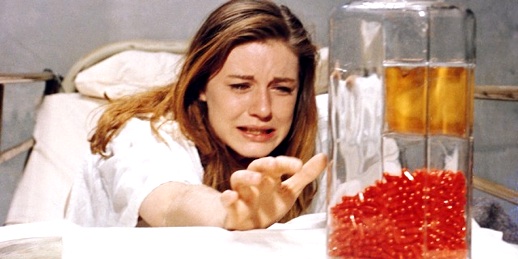
When I first read the title of the movie, I figured the word, Dolls was referring to pretty women. Wow, was I wrong. Dolls are sleeping pills that Neely becomes addicted to. The crashing and burning of Neely and Jennifer's lives are quite believable, and the movie tells the modern and often real tale of how rotten and unforgiving the world of showbiz can be.


http://parterre.com/wp-content/uploads/2013/03/lamento.jpg

The special effects used in the first half of Valley create the faux perfection and glamour that Hollywood boasts about. The second half contradicts this, providing more serious dialogue between characters, and less cutesy, clichéd romance and music.
While Valley is at heart a drama movie, and spends most of its time and effort creating luring emotional scenes, this does not excuse the rather lackluster first act. There are several subplots to this movie that begin to fade away more and more as Neely and Jennifer face their downwards spiral. Within the first ten minutes of the movie, I was introduced to a romance between Anne and another agent named Lyon Burke. About five minutes later, I was watching them have sex. Yeah, the writing is not exactly the most believable when it comes to the romantic elements. Their relationship is very rushed, and I was not quite sure why Anne and Lyon fell so quickly and madly in love with each other in the first place.

Besides the Anne and Lyon subplot, Jennifer gets an abortion while her husband, Tony endures serious health decline. Later, Jennifer is diagnosed with breast cancer. While this depressing sequence of events makes more sense by the end of the movie, I was a bit confused for the majority of the film as to why any of this was going on.

With the psychedelic era of sixties culture blossoming, it is no wonder Valley of the Dolls was such a financial success. It highlights the issue of drug addiction and overexposure that was amplified in the psychedelic era, but still remains relevant today. Valley did a decent job of filming the dangers of overwhelming fame mixed with drugs. This is a concept that was especially prevalent in the sixties with the overdose deaths of famous figures like Jim Morrison and Janis Joplin. After sitting through the monotonous songs in the beginning, and tolerating the hurried romance of Anne and Lyon, uncovered an idea that is still significant. Fame has the power to influence greatness as well as self-destruction.